Some places choose you.
I have loved the Finger Lakes since childhood — not in an abstract way, but in the specific, sensory way that stays with you. Camping at Buttermilk Falls and Robert Treman State Park with my family, hiking the gorges, the smell of water on wet rock and forest floor, the pine and leaf-damp of the trails, swimming in the cold pools beneath small waterfalls. That particular combination of hemmed-in green and moving water imprints itself early. The Finger Lakes had a way of pulling me back, even from a distance.
Javier grew up in Geneva, at the northern end of Seneca Lake, and as a teenager worked at the Seneca Army Depot a few miles south of town. The route to work took him past a handsome 1840s Italianate brick farmhouse on Yale Station Road. He would slow down to look at it. He didn't know who lived there. He just knew it was the kind of house that deserved a second glance.
Years later, living and working in Rochester, we decided to open a bed and breakfast. We looked at properties across the region — some promising, some not, none quite right. Then I found one online. I pulled up the listing and showed it to Javier: a historic brick farmhouse, Finger Lakes, Yale Station Road. He went quiet for a moment and then told me he knew that house. Had known it for years.
We drove past it for the first time in August. We walked through in September.
By that point we had toured enough properties to know what we were looking for — and more importantly, what we hadn't found yet. There is a quality that is difficult to name but immediately recognizable: a house that feels comfortable, relaxed, protective. Almost nurturing. Woodruff Manor had it from the first room. The flow of the house was just right. I knew before we finished the walkthrough that this was home.
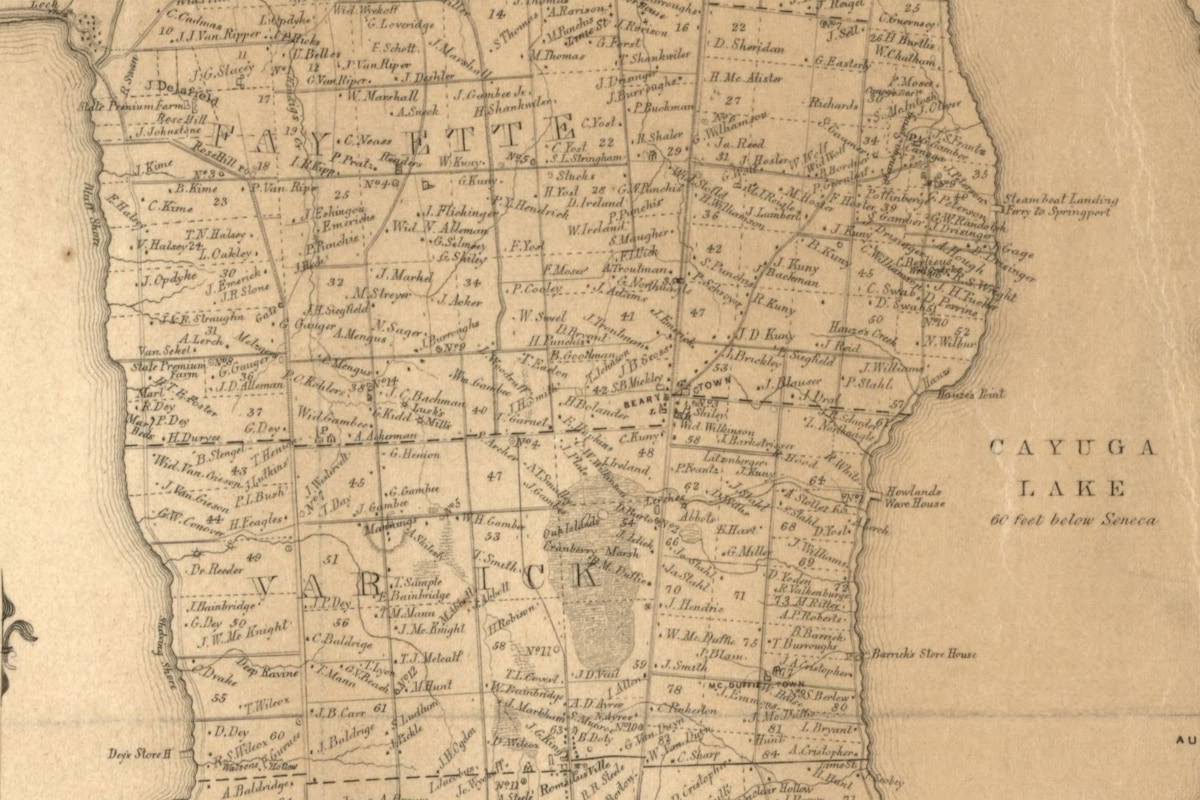
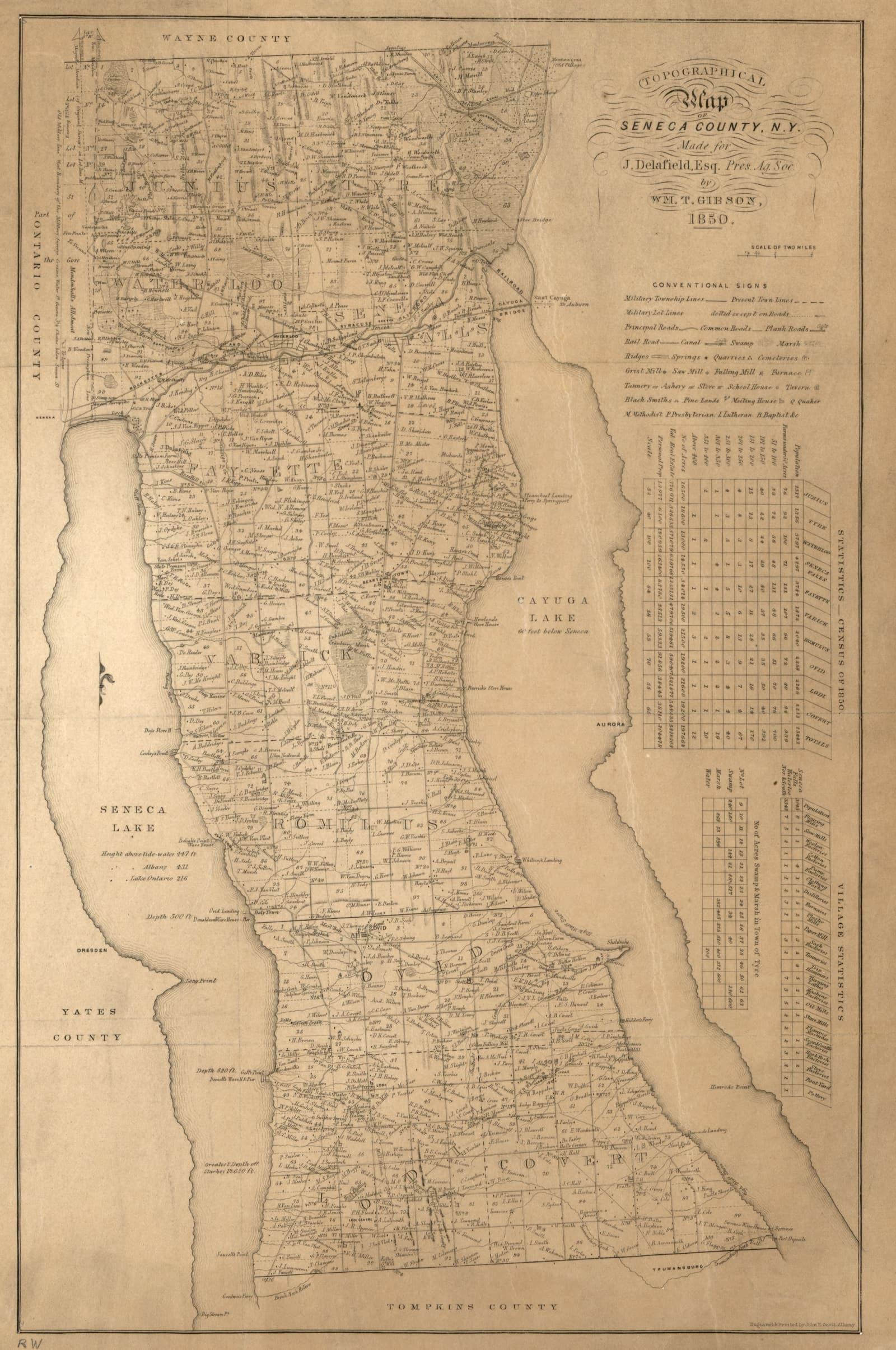
The house sits two miles east of Seneca Lake and seven miles west of Cayuga Lake, at the northern end of both — which is to say, it sits in one of the more quietly remarkable pieces of geography in New York State.
Seneca and Cayuga are the two largest of the Finger Lakes, running parallel to one another through long glacial valleys, with a narrow corridor of high ground between them. That corridor — roughly 20 miles wide and 38 miles long — is where we live. The elevated land between the lakes catches good light and drains well, and the lakes themselves moderate the temperature in a way that extends the growing season on both sides. The result is farmland that has been producing grapes, apples, and orchard fruit for well over a century.
If you are coming to the region for the first time and trying to make sense of it: think of Seneca Lake as the wine lake. Geneva anchors its northern end, and the Seneca Lake Wine Trail circles the entire lake with tasting rooms, farm stands, and a well-developed hospitality infrastructure built around the grape. Cayuga Lake is a different experience — Ithaca at its southern tip, the gorges of Taughannock and Watkins Glen within reach, cideries and distilleries alongside the wineries, and a food scene with its own distinct identity. Neither lake is better than the other. They simply offer different things, and most guests find they want a little of both.
From Woodruff Manor, both are within easy reach. That, as much as anything, is why we are here.
Thoughts, memories, or questions? We'd love to hear from you — innkeeper@woodruffmanorbnb.com